About · who's behind this
The future shows up early in some places, and late in others.
It's Abundant! is an applied futures lab in Atlanta. We help teams and young people notice what's changing, choose where to go, and build something that lasts.
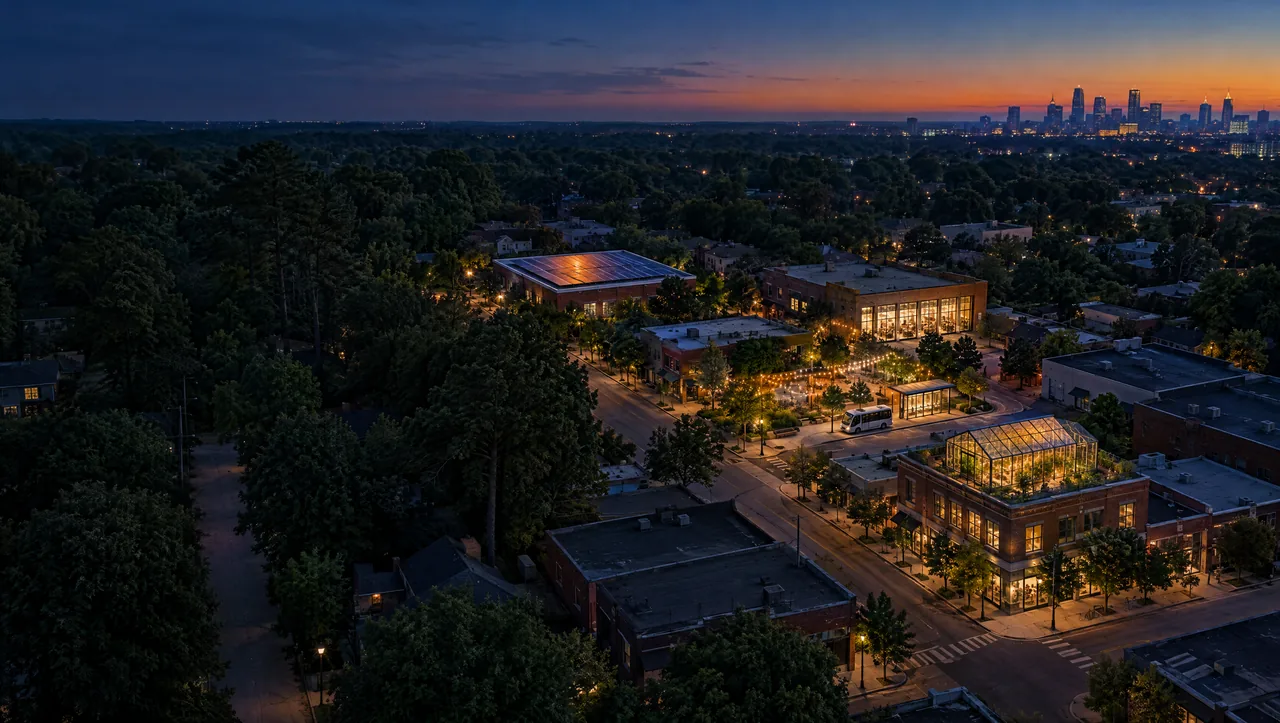
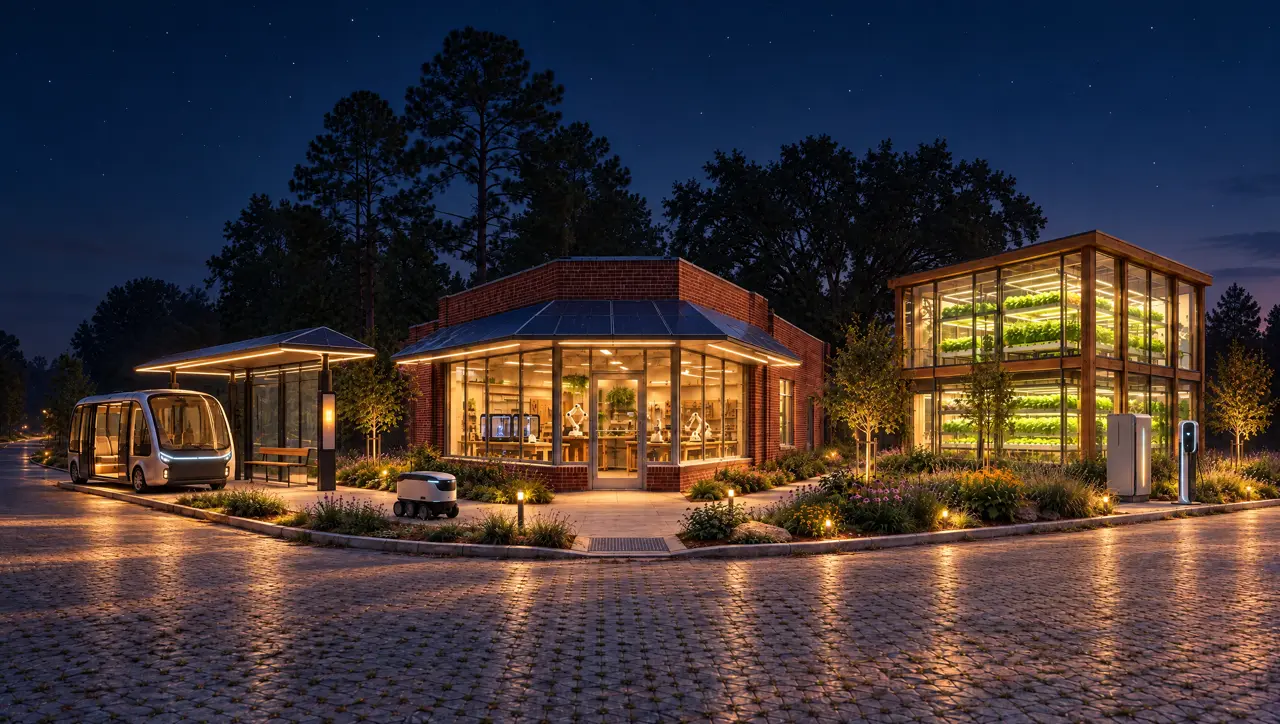
Early on some blocks, late on the next · AI illustration
Two futures, one corner
Same street. Same technology. Different decisions.
On the left, the future arrived here. On the right, it arrived a few miles away. Nothing about the tech is different. What changed is who noticed, who decided, and who built.

01 Our thesis
There's more futures than we think.
Four claims we build on, and test. The workshops, StackScore and the letter all start from these.
- Continued growthMore of what's happening now.
- CollapseThings break down.
- DisciplineWe hold back, by choice or by force.
- TransformationSomething truly new.
There is more than one future.
The future is not a single forecast to brace for. There are many possible futures, and people can shape which one arrives.
The ability to shape it is built, not born.
It takes two things: what people can do, and what their setting lets them do. Skill without time, money or permission goes nowhere. So does funding without practice.
It is built in layers.
Notice change early, work out what it means, choose a direction, test it small and make it last. Around all five, keep the work honest and accountable. We call this the Abundance Stack.
Where the gaps are, conditions often matter more than talent.
Our working bet is that many teams and neighborhoods fall behind because their conditions are thin, not because their people are. We are building StackScore to test that, and we will publish what we find either way.
Why “It's Abundant!”
Most talk about the future sounds like scarcity. We think that story is too small.
There are many possible futures, and neighborhoods, teams and teenagers can shape which one arrives. The exclamation mark is on purpose.
02 What we believe
Five things we hold to.
The future isn't scarce.
There are many possible futures, not one. Seeing more of them gives people more choices.
Plain words beat jargon.
If a 15-year-old can't follow it, we rewrite it. Clear thinking should be open to everyone.
Young people belong at the table.
Teenagers will live longest with today's decisions. They get real seats, not token ones.
Test it small first.
Small, cheap tests teach more than big plans that never leave the slide deck.
Only real numbers.
We don't invent clients, figures or quotes. If something hasn't happened yet, we say so.

Bring it to your team
Want this thinking in your room?
It starts with a free 30-minute call. If a half-day workshop fits, we plan it together. If it doesn't, we'll say so.